Grainstorm Rocket
Aug 2025 - Dec 2025
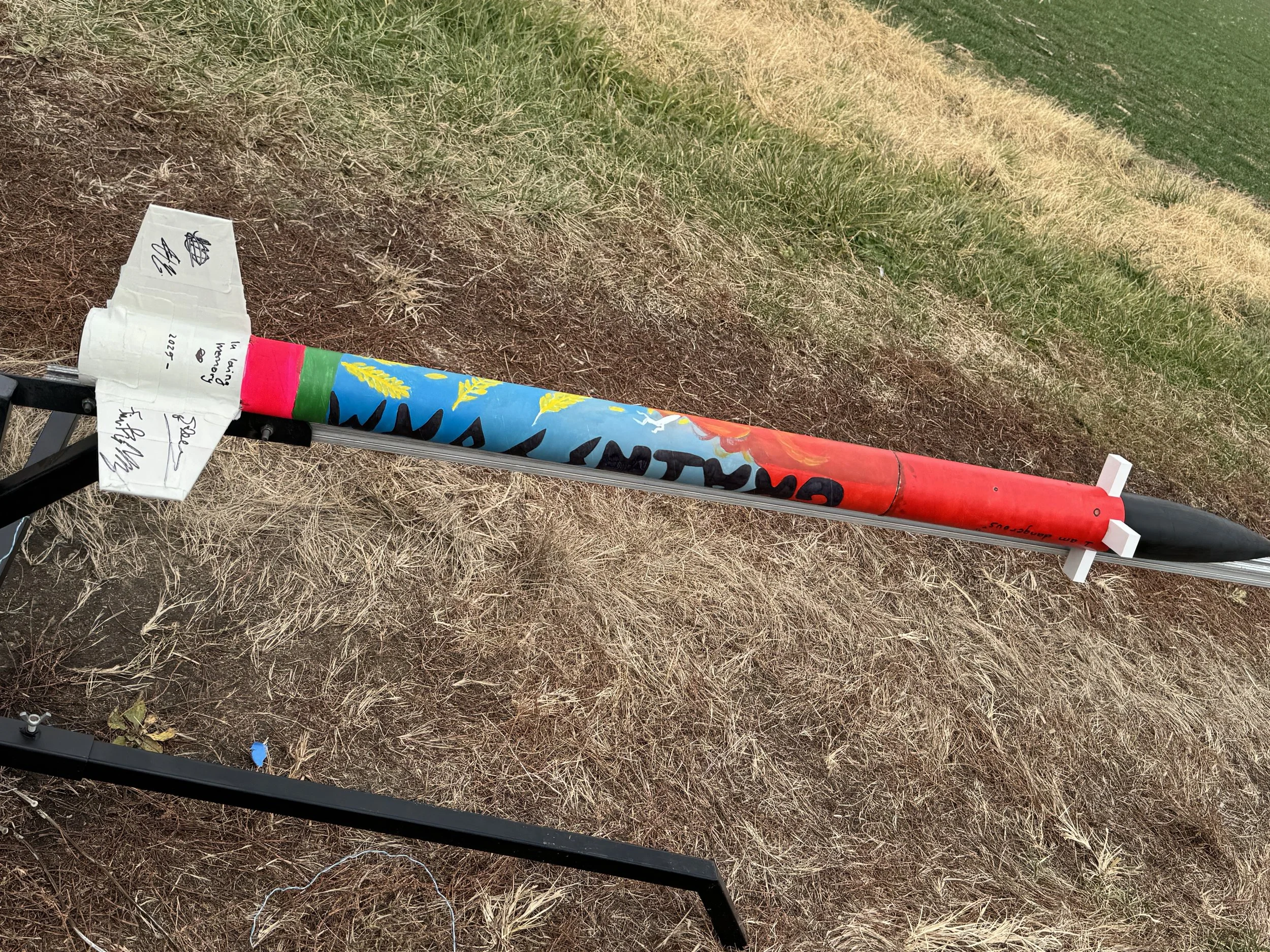
The Grainstorm project involved the design, analysis, and flight testing of a solid rocket motor with a custom, non-BATES port geometry. Teams were responsible for predicting chamber pressure history and maximum altitude based on motor design choices and launch-day conditions, then validating those predictions against flight data.
Grain Design and Analysis
Grain Geometry
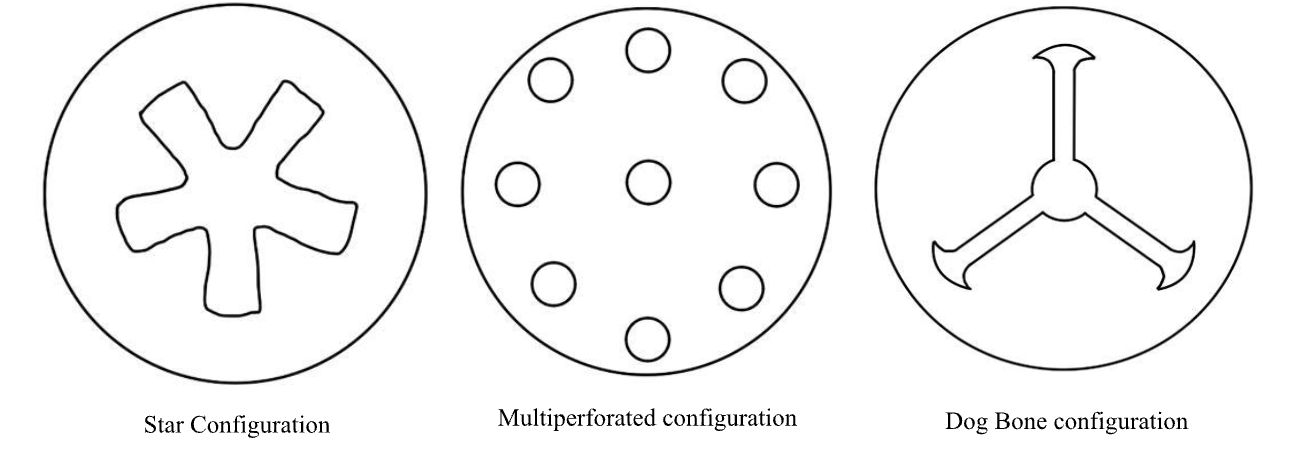
When selecting the grain geometry for Grainstorm, the primary objective was to achieve an efficient thrust profile capable of producing an upward acceleration at liftoff while sustaining its performance as the burn progresses. Mariana researched possible grain configurations, ultimately choosing a star configuration for its neutral burn behavior.
Burnback Analysis and Predictions
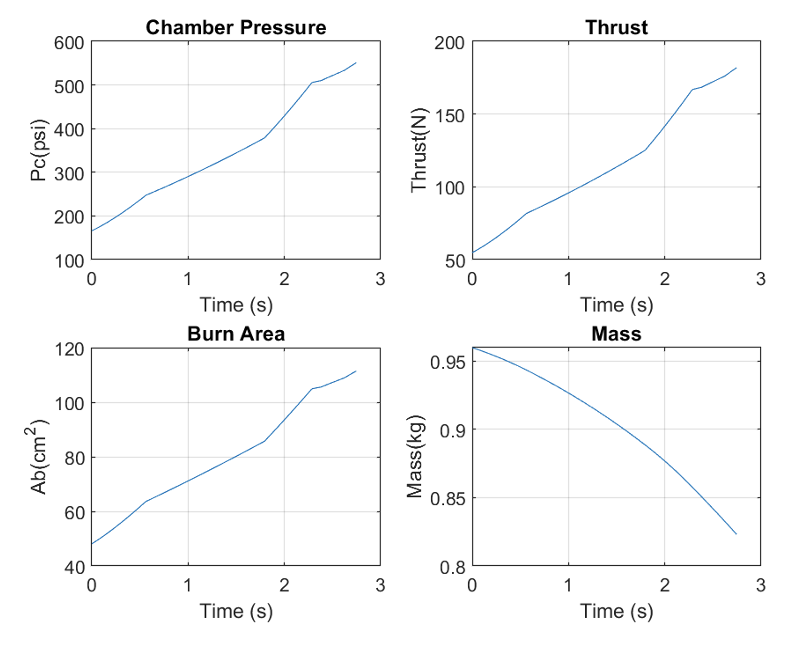
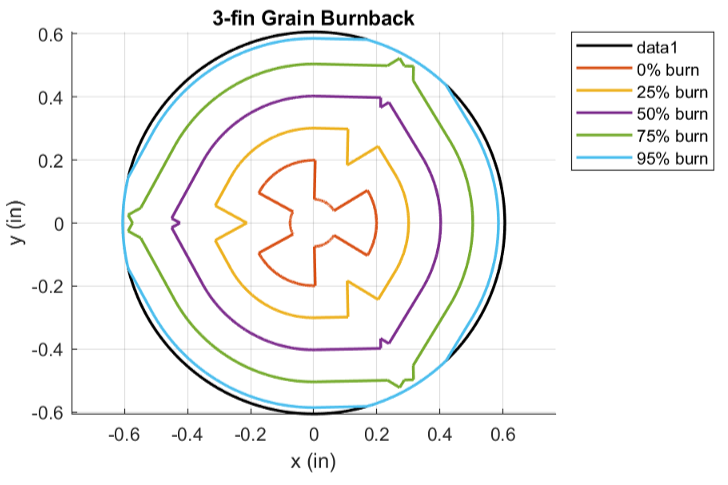
A burnback analysis was conducted on three design variants by altering the number of fins and their dimensions using OpenMotor and MATLAB. It was found that the 3-fin star geometry produced the most balanced performance, with a MEOP below the 800 psi constraint, burn times at around 2-3 seconds, and an apogee of 2034 ft.
Rocket Launch
Test Results
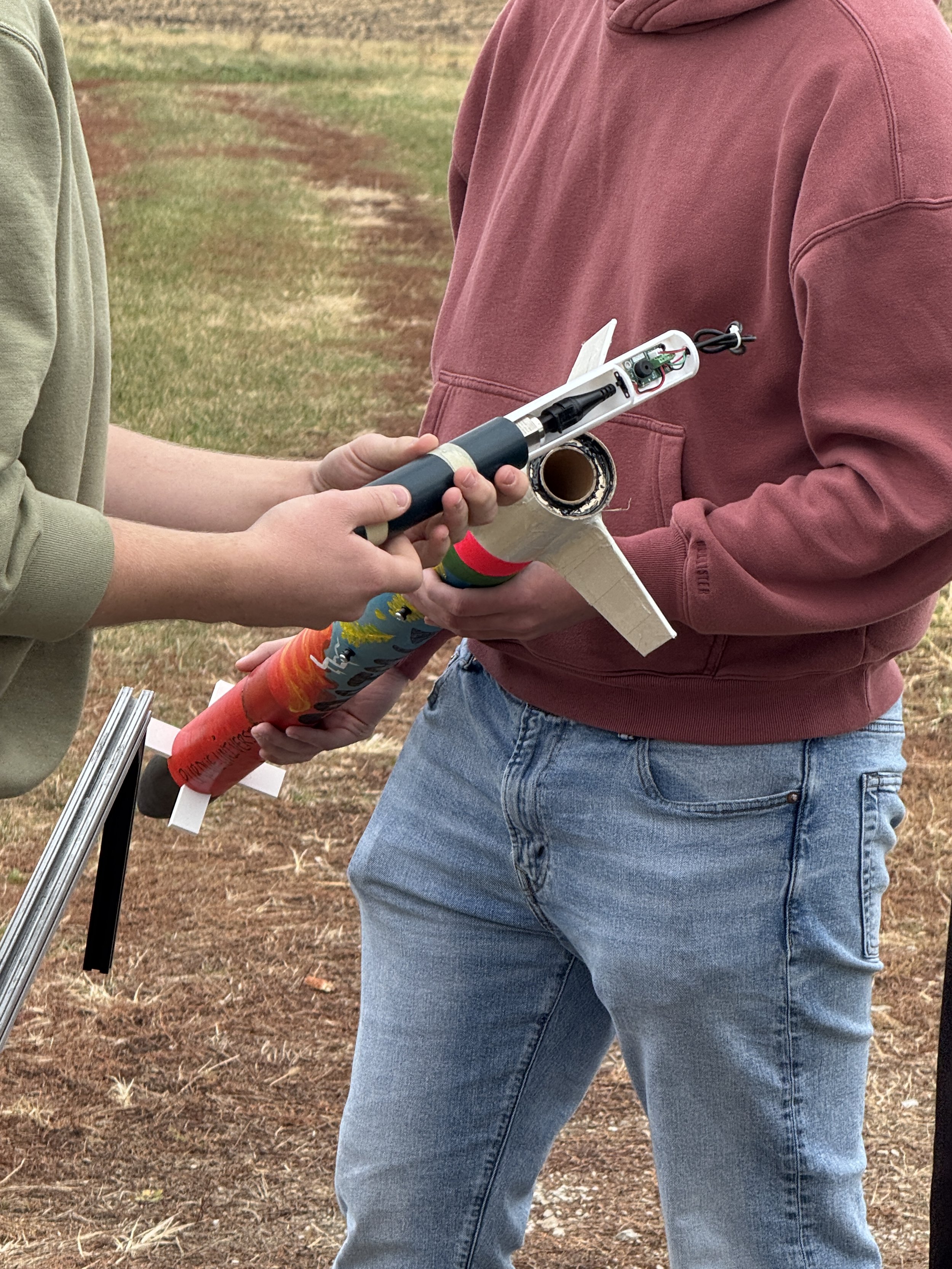
Encountering winds of 20 mph on launch day, air breaks were added to the rocket airframe. During launch, the acquired maximum altitude was 1164 ft. After touchdown, the rocket recovered nearly one mile downrange from the launch pad, consistent with the strong crosswinds present during the launch.
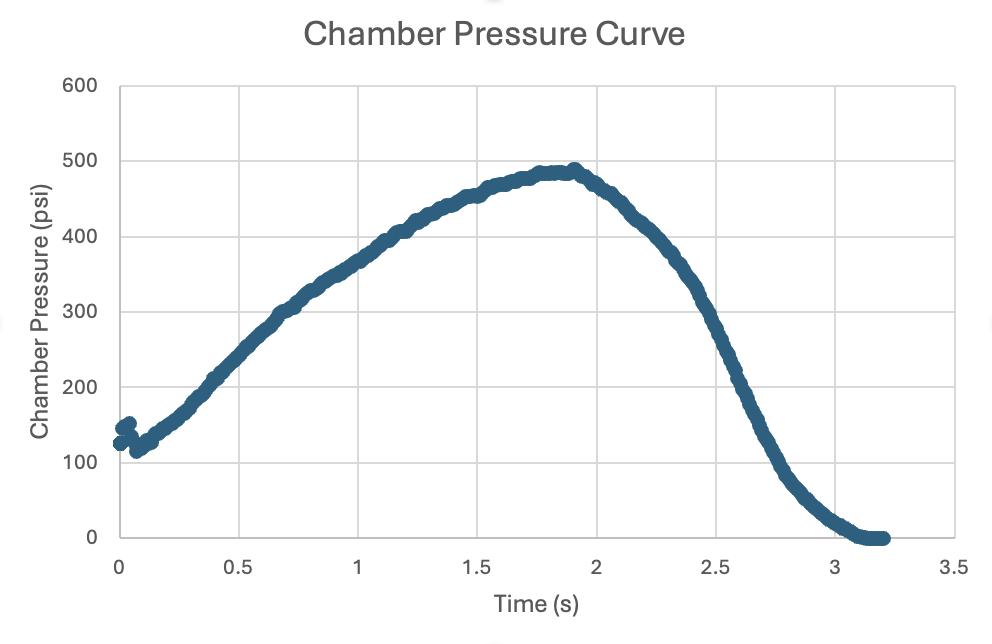
The actual measured chamber pressures were about 100 psi lower than the numerical conjecture. However, the peak pressure occurred very close to the predicted time, just under 2 seconds. Additionally, the overall shape of the pressure curve closely matched the predictions.